This is the path paved for us by Ghazi Amanullah Khan Barakzai, the enlightened King of Afghanistan, and his courageous and educated wife, Queen Soraya Tarzi. Amanullah Khan, who served as Emir from 1919 to 1926 and then as King until his abdication in 1929, did not only secure Afghanistan's independence — he opened the doors of modern schools to both girls and boys. Queen Soraya Tarzi, a woman who stood against outdated traditions, appeared in public with an unveiled face and encouraged Afghan girls to pursue knowledge. They understood that a nation's sovereignty is not merely territorial — it is intellectual. They believed that Afghanistan could only attain its true place in the world through science, critical consciousness, and collective awareness. Their aim was to raise a generation that was not only independent but intellectually sovereign. Today, we are the continuers of that same path; and this platform — Azadi — Cross-Border Academic Legacy — is a tribute to that luminous journey and a perpetuation of that precious legacy.
I am Sofia Mushahed, the founder and programmer of Azadi. My passion for creating this platform was born during my heartfelt conversations with Diba Sadat, my dear lifelong friend. We grew up together; she dreamed of becoming a doctor, and I dreamed of becoming a lawyer and working at the United Nations. Today, I live in the United States, living my dream, but Diba is forbidden from receiving an education by the Taliban. Azadi draws its life from Diba's story — and from the story of every person striving for an education who has been told that their mind does not belong to them.
I watched as young people went to university, took their final exams, and my dream was torn apart before my eyes. I am lost.
I have dedicated my life to building Azadi as a path to rewriting our shared destiny — to cross borders and unfold a new myth for an Academic Legacy that grants dignity to every global citizen and to ourselves. This is the legacy I choose. Not the legacy of power, but the legacy of possibility. Not the legacy of conquest, but the legacy of consciousness.
— Sofia Mushahed
Azadi — Our Cross-Border Academic Legacy — represents far more than a revolutionary innovation. It embodies the pursuit of equality in educational opportunities for Afghan women and for every woman around the world. Azadi is the collective aspiration of a people to determine their own destiny through the power of their own minds. For Afghanistan, this vision of Azadi is rooted in the rich tapestry of our history, culture, and resilience. It is a future where every Afghan can live with dignity and honor; where every person can carry a worthy legacy beyond borders; and where every woman can pursue her dreams without fear or oppression. This vision acknowledges the sacrifices of those who came before us while looking forward to a nation rebuilt on the principles of Academic Legacy, Justice, and a Legacy of Respect.
Our vision of Azadi encompasses educational empowerment as the cornerstone of progress. But empowerment is not merely about access — it is about decolonizing the mind. For too long, the education systems imposed upon Afghanistan — and upon the Global South more broadly — have been instruments of intellectual colonization. They have told us that knowledge lives elsewhere, that our stories are not universal, that our ways of knowing are inferior. We reject this. We envision a world where every individual, regardless of gender or background, has access to quality education that honors cultural heritage while simultaneously equipping them to interrogate, challenge, and transcend the limitations of their inherited circumstances. Through knowledge and critical thinking — through the relentless questioning of what is and the audacious imagining of what could be — future generations will be equipped to preserve what is valuable from our past while innovating for a prosperous future. Education becomes the pathway through which we reclaim our narrative, deconstruct our oppressions, and shape our national identity from a place of agency and intellectual autonomy.
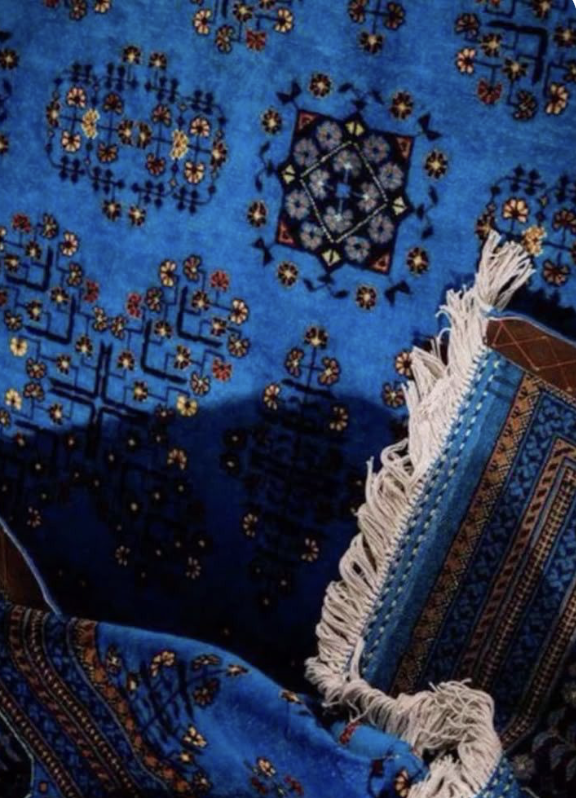
Access to information and navigational systems forms another vital pillar of our Azadi — a pillar that asks: who controls knowledge, and who is excluded from it? In a world where data is power, the denial of information is a form of modern colonization. We envision a future where our natural resources benefit our people directly, where entrepreneurship flourishes as a practice of collective dignity, and where sustainable development replaces the chains of dependency. By revitalizing traditional crafts like carpet weaving, agriculture, and mining with modern techniques and fair trade principles — by honoring the intelligence embedded in our ancestral practices while embracing the tools of the present — we can build an economy that serves all Afghans. This economic Azadi means creating pathways out of poverty and establishing foundations for long-term prosperity that respects both people and planet.
True Azadi requires inclusive governance that represents the diverse tapestry of Afghan society. But inclusion is not simply representation — it is substantive participation. We envision a system where all ethnic groups, women, and youth have meaningful participation in decision-making processes — not as tokens, but as architects. This governance model would be transparent, accountable, and rooted in the rule of law, ensuring that power serves the people rather than dominates them. It would honor our traditions of consultation (جرګه jirga) — a practice of collective deliberation that predates many modern democratic institutions — while incorporating contemporary principles that protect individual rights and foster social cohesion. In this vision, governance is not a transaction of power; it is a relationship of trust.
Ultimately, our vision of Azadi is one of peaceful coexistence — both within Afghanistan and with our global neighbors. But coexistence is not the absence of conflict; it is the presence of dialogue. We see an Afghanistan that has healed from decades of conflict — a healing that is not forgetting, but transforming. Where dialogue replaces violence, and where our strategic location becomes a bridge between cultures rather than a battleground for foreign interests. This Azadi allows us to share our rich heritage with the world while welcoming the positive contributions of the global community, creating a future where Afghanistan stands as a sovereign, respected nation at peace with itself and others — not as a victim of history, but as a shaper of it.